Buying Guides
Choosing the Right Cement for Sri Lankan Construction
15 Nov 2026 · Seegaan Hardware Team · 6 min read
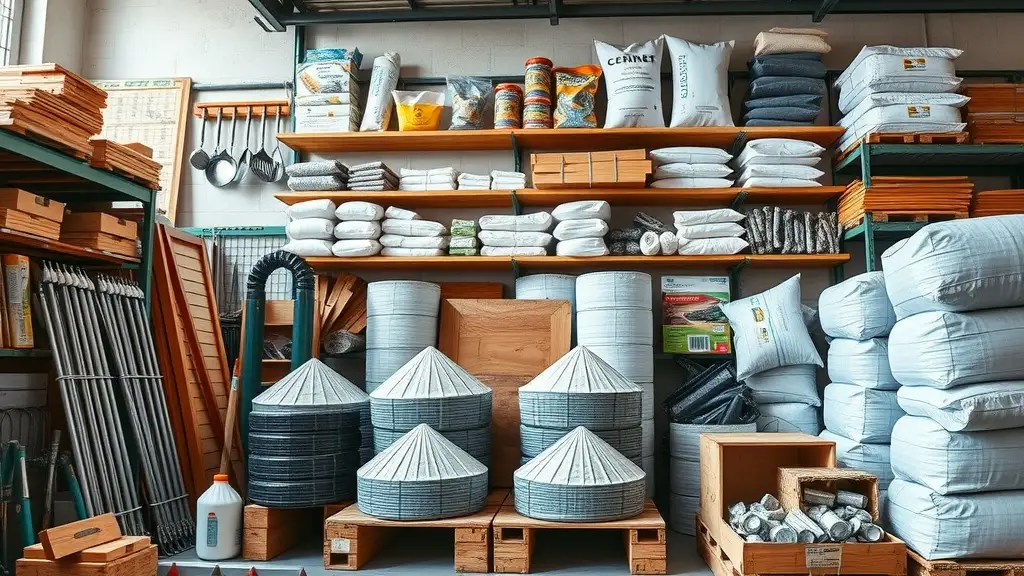
Choosing the right cement is one of the most important decisions in any Sri Lankan construction project. For most builds, Ordinary Portland Cement (OPC) is the go-to choice for structural concrete such as columns, beams and slabs, while Portland Pozzolana Cement (PPC) is widely preferred for masonry, plastering and general brickwork. On coastal or lagoon-adjacent sites, a sulfate-resisting cement may be the safer option. This guide explains the types, grades and practical checks that matter before you buy.
What are the main types of cement available in Sri Lanka?
Most cement sold in Sri Lanka falls into five practical categories, each designed for a different job. Cement is produced to Sri Lanka Standards (SLS) specifications and grouped into strength classes — commonly class 32.5, 42.5 and 52.5, which refer to the strength the cement achieves after 28 days of curing. Once you understand the type and the class, you can match the bag in your hand to the task on your site.
- Ordinary Portland Cement (OPC): the standard all-purpose cement for structural concrete. It develops strength predictably, which is why engineers typically specify it for columns, beams, slabs and foundations.
- Portland Pozzolana Cement (PPC): blended with pozzolanic materials such as fly ash, PPC is popular for masonry, plastering and brickwork. Masons often prefer its smoother workability, and blended cements can offer improved long-term durability and chemical resistance.
- Sulfate-resisting cement: formulated for soil or groundwater with a high sulfate content — a consideration in coastal belts, reclaimed land and areas near lagoons.
- Rapid-hardening cement: used when early strength matters, such as urgent repairs or work that must carry load quickly.
- White and specialty cements: used for decorative finishes, rendering and architectural detail rather than structure.
Which cement should you use for each part of your build?
The safest approach is to match the cement to the application, and for structural work always follow the mix specification given by your engineer or architect. As a practical guide:
- Foundations, columns, beams and slabs: OPC — usually strength class 42.5 — remains the default choice for reinforced concrete. A commonly used site mix for RCC work is 1:2:4 (cement, sand and metal), but your ratios must come from your structural drawings.
- Brick and block masonry: PPC performs well in mortar; a 1:6 cement-to-sand ratio is typical for brickwork.
- Plastering and rendering: PPC is widely used on walls and ceilings because it produces a smooth, workable finish.
- Coastal or lagoon-side foundations: discuss sulfate-resisting cement with your engineer before work begins.
- Small repairs and patching: good-quality OPC in modest quantities is usually sufficient.
How does Sri Lanka's climate affect your cement choice?
Sri Lanka's heat, humidity and salty coastal air influence both the cement you buy and the way you use it. Concrete gains strength as it cures, and in hot weather it can dry out too quickly, weakening the final result. Whatever type you choose, curing is where quality is won or lost: keep new concrete continuously damp for at least seven days, and for longer on hot, windy sites. Many builders also pour early in the morning in hot districts so the concrete is not at peak temperature while it sets. PPC is sometimes chosen for large, thick pours because blended cements tend to generate heat more slowly, which reduces the risk of thermal cracking in mass concrete.
What should you check before buying cement?
Cement quality starts at the shop, not on site. Before you order, run through this checklist:
- SLS certification: buy cement manufactured to Sri Lanka Standards and sold by reputable brands and dealers.
- Freshness: check the manufacture date printed on the bag. Cement slowly loses strength in storage, so fresher stock is stronger stock.
- Bag condition: reject bags that are torn, re-stitched, damp-stained or contain hard lumps — lumps mean the cement has already reacted with moisture.
- Consistency: use one brand and one strength class throughout a structural element, so strength stays predictable.
- Delivery planning: for larger projects, schedule deliveries so cement is not sitting on site for months.
Cement prices vary by brand, grade, pack size, order volume and location; contact us for current rates and availability before you budget.
How should cement be stored on a building site?
Cement absorbs moisture from the air, so poor storage can ruin an expensive delivery before a single bag is opened. Store cement in a dry, enclosed space, raised off the floor on a timber platform or pallets and kept a short distance from exterior walls. Keep bags away from windows and doorways that let in rain, and never stack them directly on soil or sand. Follow a first-in, first-out routine so older stock is used before new deliveries, and aim to use bags within a few weeks of purchase. If a bag has hardened into a semi-solid block, do not use it for structural work, no matter how small the job.
Where can you buy cement and building materials in Sri Lanka?
Seegaan Hardware Centre supplies cement alongside steel, paint, plumbing, electrical goods, tools and other construction materials, direct to builders, contractors and homeowners. Browse our [product range](https://seegaan.lk/products) to see what we stock, or [get in touch](https://seegaan.lk/contact) for current prices, delivery arrangements and help estimating quantities for your project.
Frequently asked questions
What is the difference between OPC and PPC cement?
OPC (Ordinary Portland Cement) is a pure Portland cement used mainly for structural concrete, while PPC (Portland Pozzolana Cement) is blended with pozzolanic materials such as fly ash. PPC is commonly chosen for masonry, plastering and general work because of its smooth workability and long-term durability, while OPC gives predictable strength for columns, beams and slabs.
Which cement is best for house construction in Sri Lanka?
There is no single answer: most homeowners use OPC, commonly strength class 42.5, for the structural frame and PPC for masonry, plastering and finishing. The deciding factor should be the specification in your drawings — if an engineer or architect has stated a cement type and mix, follow it.
How long can cement be stored before it goes bad?
Cement should be treated as a fresh product. Stored properly — dry, off the ground and sealed — it remains usable for a limited period, but it steadily absorbs moisture and loses strength from the day it is manufactured. Plan to use delivered bags within a few weeks, and never use cement that has formed hard lumps.
How much does cement cost in Sri Lanka?
Cement prices vary depending on brand, strength class, pack size, order volume and delivery location, and they change over time, so we do not publish fixed prices. Contact Seegaan Hardware Centre for current rates and a quote for your project.